

Mitel Powers AI Vertical Innovation Growth
By Jim Lundy
Mitel Powers AI Vertical Innovation Growth
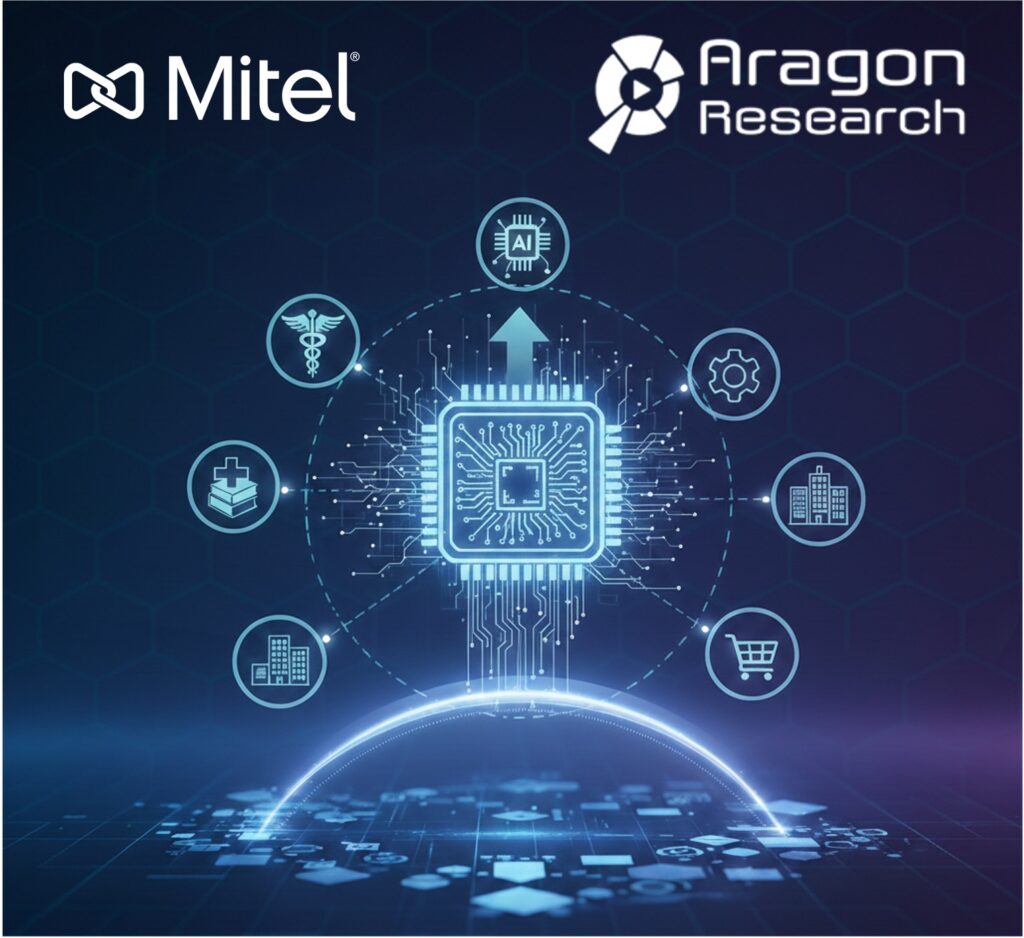
Mitel and L-SPARK recently celebrated the showcase of their inaugural Unified Communications Accelerator cohort, marking a pivotal shift in how legacy communication vendors drive innovation. In just six months, eight high-potential companies moved from concept to market-ready integrations using Mitel’s latest automation tools. This collaboration demonstrates a focused effort to embed AI and IoT deeply into vertical-specific workflows like hospitality and retail. This blog overviews the Mitel and L-SPARK Showcase and offers our analysis.
Why did Mitel launch the Unified Communications Accelerator
The accelerator program was designed to solve the “integration gap” that often prevents enterprises from adopting new AI and IoT technologies. By providing early-stage companies with direct access to Mitel’s low-code/no-code Workflow Studio and Mitel CX platform, Mitel is essentially outsourcing specialized innovation while ensuring the results are natively compatible with its ecosystem. The showcase highlighted eight distinct solutions ranging from voice-enabled operations for multi-location businesses to AI-powered guest engagement tools for hotels. This strategy allows Mitel to offer highly tailored, vertical solutions without the long development cycles typically associated with enterprise-grade communications software.
Analysis
The successful showcase of this cohort represents more than just a series of product launches; it is a strategic maneuver to transform Mitel into a “platform of platforms.” In an era where generic AI tools like ChatGPT are everywhere, the real value for enterprises lies in specialized agents that understand specific business contexts. By fostering a network of certified partners like MosaicVoice for compliance or Typewise for autonomous case resolution, Mitel is building a moat of high-value, integrated applications that are difficult for competitors to replicate quickly.
Mitel’s vertical strategy represents a fundamental pivot toward “mission-critical” communications that the public cloud often struggles to address. While competitors focus on horizontal collaboration, Mitel is doubling down on industries like healthcare, hospitality, and retail where downtime or a lack of context can result in lost revenue or safety risks. By leveraging a hybrid approach that combines on-premises control with cloud-driven AI, Mitel is positioning itself as the only vendor capable of handling the data sovereignty and high-availability needs of regulated global markets. This news implies that the value of a communications platform is no longer measured by its dial tone, but by its ability to orchestrate complex, industry-specific business processes in real time.
Furthermore, the focus on the “frontline” worker—the nurse, the hotel clerk, or the floor manager—is a strategic masterstroke. Most AI innovation to date has targeted desk-bound knowledge workers, leaving a massive portion of the global workforce underserved. Mitel is filling this void by using its accelerator cohort to build tools that prioritize voice-first and mobile-first interactions. We believe this focus on “agentic” workflows—where AI doesn’t just suggest an action but executes it—will force other legacy players to either replicate this partner-led innovation model or risk becoming a commoditized utility in the eyes of specialized enterprise buyers.
What should enterprises do about this news
Enterprises currently operating in the hospitality, retail, or regulated contact center sectors should review the specific integrations developed during this cohort to identify immediate efficiency gains. For example, organizations using Microsoft Teams can look at the TeamMate Technology integration to see if it simplifies their voice architecture while maintaining PBX reliability. IT leaders should evaluate Mitel’s Workflow Studio as a way to build their own custom automations, but more importantly, they should look at these certified accelerator partners as a lower-risk way to deploy specialized AI that has already been vetted for the Mitel environment.
Bottom Line
The Mitel and L-SPARK partnership has proven that a well-structured accelerator can drastically reduce the time it takes to bring sophisticated AI and IoT solutions to the enterprise communications market. For Mitel, this ecosystem-first approach provides a steady stream of vertical innovation that keeps their platform relevant in a rapidly evolving AI landscape. Enterprises should view Mitel not just as a dial tone provider, but as a hub for specialized, integrated business intelligence that can now be deployed with significantly less friction than traditional custom integrations.
Have a Comment on this?