


NVIDIA: From GPU to AI Foundation Builder
By Jim Lundy
NVIDIA: From GPU to AI Foundation Builder
The technological landscape is being fundamentally reshaped by AI, and NVIDIA, long recognized for its GPUs, is aggressively advancing its role as the foundational software provider. The sheer scope of their recent NeurIPS announcements—ranging from open-source models for autonomous driving to new tools for digital AI safety and speech—underscores a strategic pivot. This blog overviews the “NVIDIA Open AI Announcements” and offers our analysis.
Why Did NVIDIA Advance Open AI Model Development?
NVIDIA’s announcements at NeurIPS targeted both Physical AI and Digital AI. Beyond the foundational Alpamayo-R1 model for autonomous vehicles, NVIDIA also debuted significant open tools for digital applications. These included new multi-speaker speech AI models, such as MultiTalker Parakeet and Sortformer, designed to improve real-time audio processing and speaker diarization. Crucially, they focused on AI safety by releasing the Nemotron Content Safety Reasoning model and a related synthetic audio dataset. Furthermore, new open-source libraries like NeMo Gym and the NeMo Data Designer Library were launched to accelerate and simplify the development of high-quality synthetic datasets and reinforcement learning environments for LLM training.
Analysis: Setting the Foundation for the Next AI Wave
NVIDIA’s open-source strategy is a sophisticated form of market capture. By releasing leading-edge foundational models like Alpamayo-R1, they are effectively setting the de facto technical standard for complex domains like Level 4 autonomous driving research. Competitors in the automotive, robotics, and industrial automation sectors are now faced with a difficult choice. They must either build their next-generation applications on the open NVIDIA platform, which reinforces the demand for NVIDIA hardware, or divert significant capital to replicating a comparable, unproven foundational model.
This moves the competitive barrier past the GPU and into the high-value layer of the AI model itself, cementing NVIDIA’s vertical control over the entire AI development pipeline. For hyperscalers—Google, AWS, and Microsoft—this accelerates the shift from raw hardware provider to managed service orchestrator. Their core challenge becomes ensuring their respective cloud infrastructure remains the optimal, most cost-effective place to deploy and fine-tune these NVIDIA-originated foundational models, often leveraging integrated services like Microsoft Azure AI Foundry or Google Vertex AI.
For a firm like Palantir, which focuses on operational AI in complex, real-world environments (like defense or supply chain), this open model provides an immediate, highly sophisticated reasoning layer. Palantir’s value proposition of transforming data into decision intelligence is amplified by integrating a ready-made, high-quality reasoning agent, allowing them to focus on their unique Ontology and platform-specific applications rather than building VLA models from scratch. NVIDIA is now positioning its software ecosystem, not just its silicon, as the non-negotiable layer for physical AI innovation.
Enterprise Action: Evaluate the Physical AI Roadmap
For enterprises engaged in high-stakes, real-world AI applications—particularly autonomous vehicles, advanced robotics, and heavy industry automation—this news demands a high-priority response. This is not simply a trend to observe. Chief Technology Officers and R&D leaders should actively evaluate the Alpamayo-R1 model and the Cosmos platform’s development cookbooks. Understanding these open frameworks is critical. Failure to assess their implications risks being perpetually behind the competitive curve or accepting higher integration costs later as the industry standardizes on this open foundation.
Bottom Line: NVIDIA Owns the AI Stack
The sheer breadth of open models and software tools announced by NVIDIA at NeurIPS validates their transition from a chip manufacturer to an AI infrastructure company. The strategic opening of cutting-edge models like Alpamayo-R1 is designed to expand the ecosystem and ensure that future AI applications are built for the NVIDIA stack. Enterprises must view these open models as an unavoidable standard-setter and consider the immediate impact on their long-term AI development strategy and vendor dependencies.
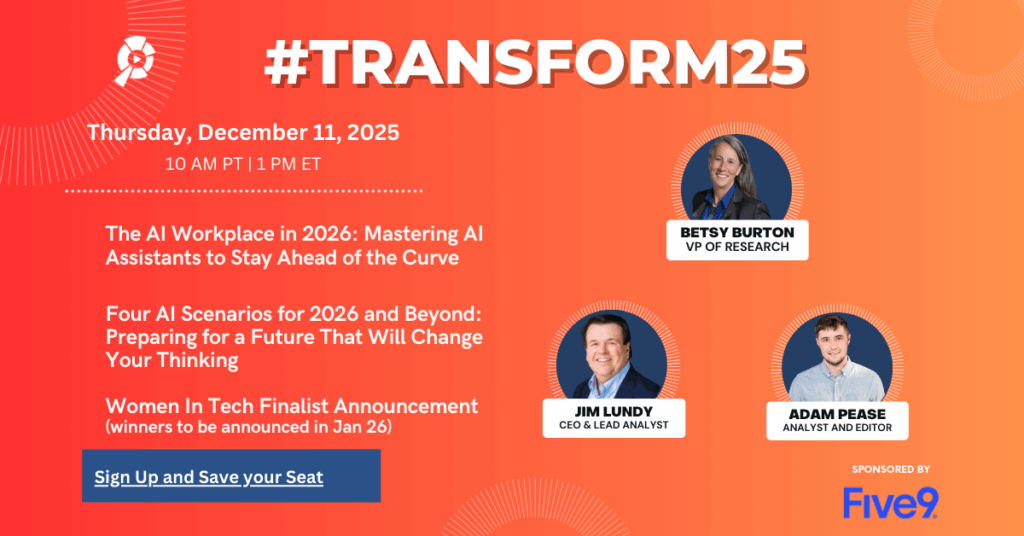
Aragon’s Transform 25 – The Future of AI
-
display trackbacks
display trackbacks
Comments { 2 }