


Apple Seeks Injunction to Block OpenAI
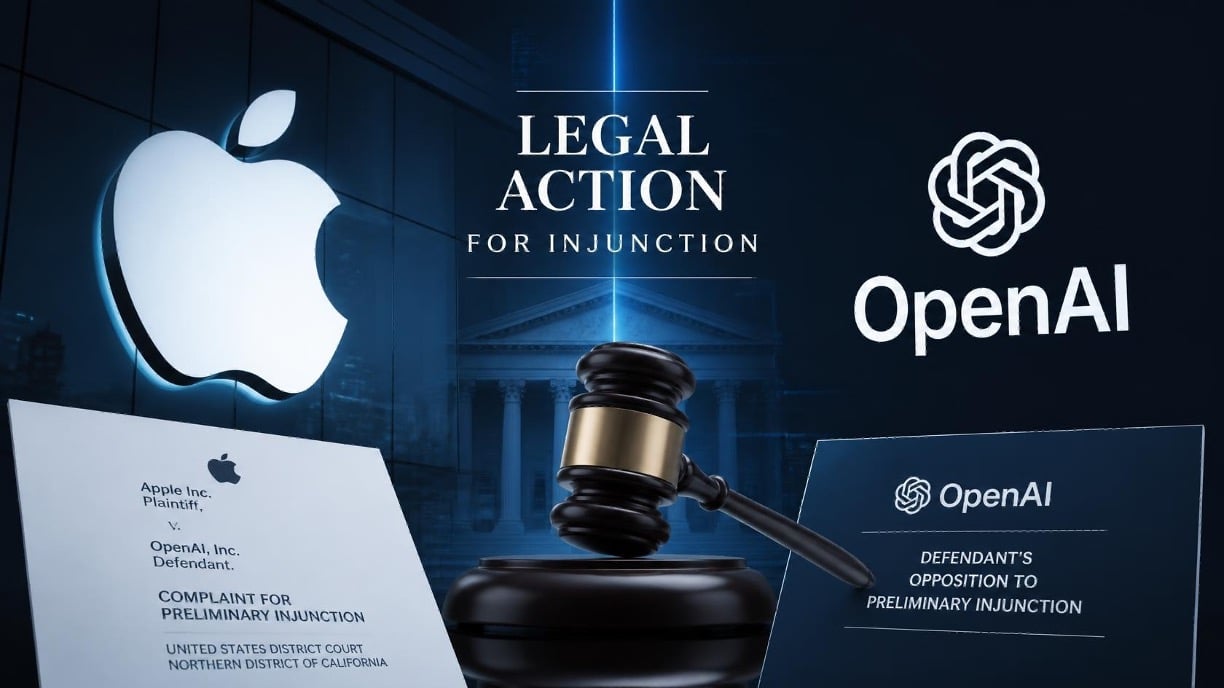
Image design by Aragon, rendered by Canva.
By Jim Lundy
Apple Seeks Injunction to Block OpenAI
The race to define post-smartphone ambient artificial intelligence hardware has shifted from technological competition to legal warfare. Legacy technology giants view proprietary hardware architectures and component designs as critical moats against aggressive foundation model developers.
As generative software capabilities homogenize across providers, physical consumer devices represent the next major market differentiation layer. Control of specialized supply chains and custom engineering talent now determines long-term enterprise value.
This blog overviews the Apple request for a preliminary injunction against OpenAI and offers our analysis. Note this is part II of our coverage. See first blog here.
Why did Apple Seek an Injunction Against OpenAI
Apple escalated its legal fight against OpenAI by filing for a preliminary injunction in federal court to halt the startup from developing hardware devices using stolen trade secrets. The court filing expands the scope beyond the original complaint, seeking expedited discovery against OpenAI, its foundation, startup io, and former employees Chang Liu and Tang Yew Tan.
Apple claims its ongoing investigation revealed eleven additional former workers who may have participated in or witnessed proprietary data exfiltration. The filing details pre-interview meetings where unannounced product specifications were discussed, confidential document screenshots taken prior to job interviews, and former staff contacting Apple to return retained work devices after litigation commenced.
OpenAI publicly countered the preliminary injunction request, calling it unnecessary and based on inaccurate claims, while asserting it has no interest in third-party trade secrets. The startup pointed to administrative missteps by Apple, including misdirected legal correspondence and security oversight regarding system access management.
Analysis
This legal escalation demonstrates that the value boundary in artificial intelligence is pivoting rapidly from algorithmic software models to specialized physical hardware integration. As foundation software models become commodities, proprietary edge architectures, custom system-in-package schematics, and specialized thermal management become core competitive moats.
For OpenAI, an injunction would severely disrupt its hardware roadmaps and threaten its venture investments in physical product ventures like io. Establishing an independent hardware footprint requires pristine intellectual property lineage, making any preliminary injunction a strategic setback for device manufacturing timelines.
For Apple, this aggressive enforcement strategy serves a dual purpose beyond recovering internal engineering designs. It creates an explicit warning to talent pools across silicon design and hardware engineering teams, raising the friction and risk associated with joining rival artificial intelligence hardware initiatives.
The conflict highlights growing vulnerabilities of collaborative enterprise ecosystems where talent flows between strategic partners. Organizations that previously shared technology integrations must now navigate aggressive intellectual property friction as competitive boundaries shift into new product categories.
Enterprise Recommendations
Enterprise technology leaders must treat this escalating legal dispute as a clear signal to audit vendor risks across emerging hardware ecosystems. Organizations evaluating upcoming hardware form factors should model potential delays and supply chain disruptions resulting from preliminary injunctions.
IT executives should review employee offboarding security protocols immediately to prevent sensitive architectural data and trade secrets from leaking during talent transitions. Managing system access credentials, tracking hardware assets, and enforcing strict data loss prevention policies remain critical components of corporate governance.
Sourcing teams must ensure software and hardware procurement contracts contain robust indemnification clauses against third-party trade secret litigation. Vendor reliance on questionable intellectual property pipelines exposes enterprise customers to downstream regulatory and operational exposure.
Bottom Line
The legal battle between Apple and OpenAI signals a maturing market where physical infrastructure and proprietary designs determine competitive advantage. Enterprises must prepare for operational friction and potential launch delays as intellectual property disputes spread across the artificial intelligence sector. Maintaining vendor agility and enforcing strict internal data loss prevention policies will safeguard organizations against downstream legal and supply chain disruptions.
Related Blogs:
Apple Sues OpenAI, alleges theft of AI Tech
Apple Reboots Apple Intelligence
Eyewear Market Evolution: Apple Tests Smart Glasses Styles
Apple M5 Pro MacBook powers Edge AI
Important Research related to this Blog:
Also – Check out all our Podcasts HERE
-
display trackbacks
Comments { 1 }