


Apple Refreshes Mac Lines For Edge AI
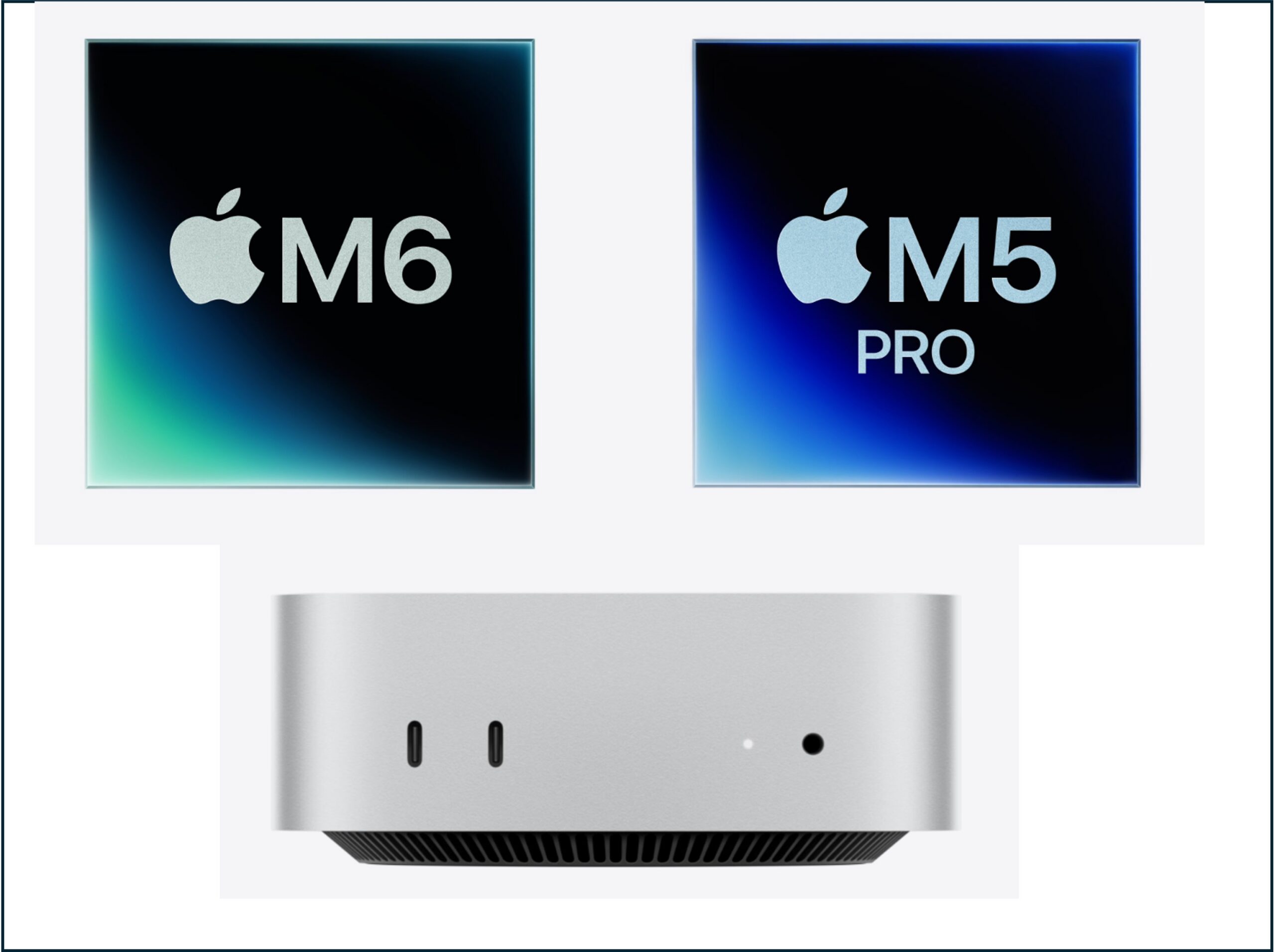
Image Source: Apple.
By Adam Pease
Apple Refreshes Mac Lines For Edge AI
Desktop computing is undergoing a fundamental structural shift as software developers increasingly pull artificial intelligence workloads off public cloud infrastructure and onto local hardware. Vendor competition in specialized developer silicon is intensifying rapidly across the technology landscape. Apple announced updated Mac Mini and Mac Studio desktop computers featuring new M6 and M5 series processors designed specifically for artificial intelligence applications. This blog overviews the “Apple Mac Mini and Mac Studio AI Refresh” and offers our analysis.
Why Did Apple Announce New Mac Hardware?
Silicon vendors are rushing to capture the growing market of developers building decentralized artificial intelligence agents. Apple introduced refreshed desktop systems featuring advanced unified memory architectures and updated neural engines designed to eliminate bandwidth bottlenecks during local model execution. The base price point for the Mac Mini has increased to reflect rising memory component costs, while higher-end configurations now support linked workstation clusters capable of processing large language models locally without cloud dependencies.
Analysis
This announcement represents a strategic maneuver by Apple to bypass traditional cloud hyperscalers and cement its ecosystem as the primary environment for edge artificial intelligence development. By enabling physical hardware clustering for trillion-parameter models, Apple is challenging the assumption that complex execution requires continuous cloud infrastructure. Traditional enterprise workstation vendors and silicon manufacturers will face mounting pressure to deliver integrated hardware and memory architectures that match this local compute capability.
Enterprise technology leaders should evaluate local hardware clusters as a cost-effective alternative for specialized software development and sensitive data workflows. Organizations experiencing expanding cloud infrastructure bills for artificial intelligence experimentation should benchmark local desktop compute capabilities against their current cloud spending. Security and architecture teams must assess how local model execution alters internal data governance policies and endpoint protection frameworks over the coming year.
Bottom Line
Apple is actively repositioning its desktop hardware line from traditional workstation endpoints into essential infrastructure for decentralized artificial intelligence development. Enterprise IT leaders should audit current developer cloud expenditure and pilot high-memory local workstations for privacy-sensitive research projects.
Have a Comment on this?