

Seismic and Highspot Merge: A New Era for Sales
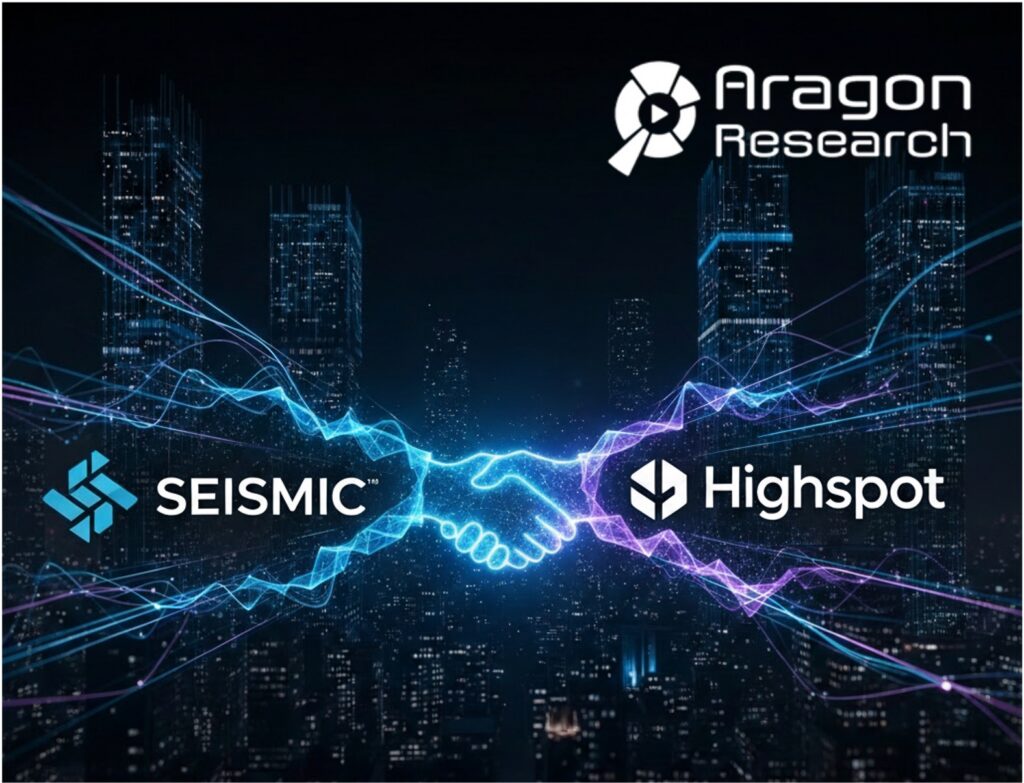
Seismic and Highspot have agreed to merge.
By Jim Lundy
Seismic and Highspot Merge: A New Era for Sales
The sales enablement landscape shifted permanently today with the announcement that industry titans Seismic and Highspot have entered into a definitive merger agreement. This consolidation brings together the two primary leaders in the enablement category to create the largest firm in the revenue enablement market. This blog overviews the Seismic and Highspot merger news and offers our analysis.
Why did Seismic and Highspot announce a merger?
The primary driver for this merger is the escalating complexity of the modern revenue lifecycle and the urgent need for integrated AI-driven performance tools. As enterprises move away from siloed sales tools toward unified revenue enablement, the demand for a platform that spans content, coaching, learning, and analytics has become the market standard.
By merging, these two former rivals aim to eliminate the “fragmented tech stack” problem that many GTM teams face, combining Seismic’s deep enterprise governance and automation with Highspot’s agentic GTM performance capabilities. The new company will operate as Seismic and after the deal closes, Seismic CEO Rob Tarkoff will serve as CEO. Highspot CEO Robert Wahbe will join the Seismic Board of Directors.
Analysis
This move is less about expanding a customer base and more about accelerating a unified AI roadmap that neither could achieve as rapidly while competing for the same budget. At Aragon Research, we have tracked both firms as Leaders for years, and their combination suggests a pivot toward a “winner-take-all” strategy in the enterprise segment.
The impact on the market will be immediate. For competitors, the bar for entry has just been raised to a high level in terms of R&D scale and global reach. We expect this will force a wave of secondary consolidations among smaller specialized vendors who can no longer compete with the “Seismic-Highspot” footprint. Note that the Showpad and Bigtincan merger in 2025 foreshadowed this.
For the firms themselves, the challenge will be the technical integration of Highspot’s native Nexus AI engine with the Seismic Enablement Cloud. If they can successfully merge these architectures without disrupting the user experience, they have the opportunity to create a de facto operating system for revenue teams. However, the challenge for SaaS providers is to convince their customers that they have a clear AI strategy with the Assistants and AI Agents to back that up. This is one of the challenges for the combined company to overcome.
Collision Course with CRM and Engagement
In the overall Sales tech stack, there is a collision course emerging over AI. There is pressure on CRM firms to offer agents. On top of that, Sales Engagement (e.g. Outreach and Salesloft) firms are also under intense pressure – as AI Agents will be able to perform many of the tasks that their platforms enabled.
On the CRM side, younger users just want to use ChatGPT to ask questions of their CRM and that means that CRM providers must respond with better Assistants and Agents. For Revenue enablement the opportunity is significant. In fact, with Agentic Agents, we expect Sales Engagement functionality to be merged into the overall Revenue Enablement stack.
What should enterprises do about this news?
Aragon feels that all Revenue Enablement firms need to offer full Sales Assistants and then a series of task based AI Agents.
Enterprises currently using either platform should treat this as a signal to review their long-term enablement strategy and vendor roadmap. While the companies have stated that both platforms will continue to be supported, customers should prepare for an eventual convergence plan and evaluate how this affects their existing technology stack.
We recommend that Revenue enablement leaders engage with their combined account team to understand the timeline for integrated AI features and ensure that any new contract terms reflect the stability of the combined entity. For others, this move suggests that all revenue enablement providers will need to have a clearly defined roadmap for AI.
Bottom Line
The merger of Seismic and Highspot creates an undisputed category leader that is uniquely positioned to define the future of AI-driven revenue performance. This transaction validates the necessity of a unified platform approach for global organizations looking to connect strategy to execution. Enterprises should stay closely aligned with the new Seismic leadership to maximize the value of this massive consolidation in the sales technology market.
Have a Comment on this?