


Sweetpea: OpenAI teases Markets with AI Earbuds
By Jim Lundy
Sweetpea: OpenAI teases Markets with AI Earbuds
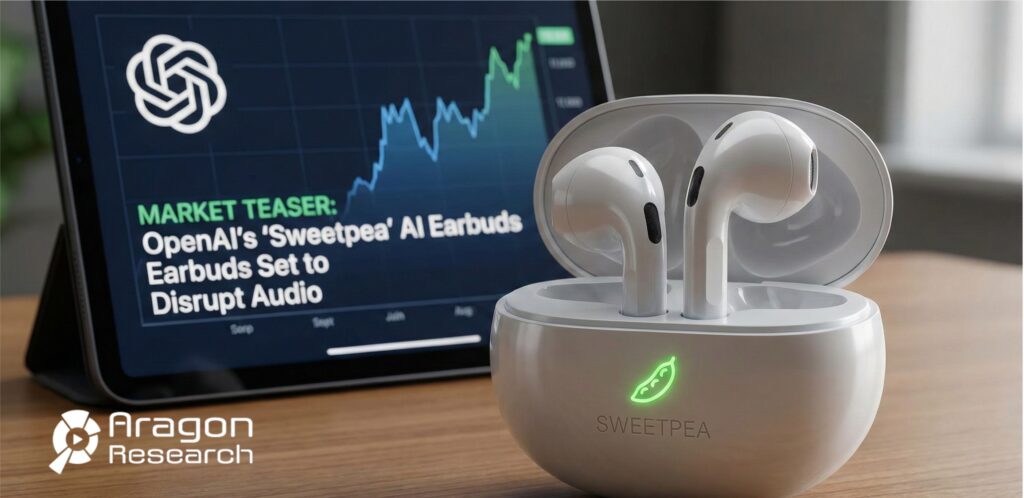
The shift toward personal artificial intelligence and AI enabled wearables is moving into the audio space as software leaders seek direct consumer access. Reports indicate that OpenAI is preparing to launch its first dedicated hardware device, codenamed Sweetpea, in the second half of 2026. This blog overviews the OpenAI Sweetpea news and offers our analysis.
Why did OpenAI tease the Sweetpea earbuds
OpenAI is reportedly developing high-performance earbuds designed by former Apple design chief Jony Ive to serve as a primary interface for ChatGPT. The device is expected to feature a custom 2-nanometer processor to handle complex AI tasks locally rather than relying entirely on cloud processing. By entering the hardware market, OpenAI aims to establish a distribution channel independent of mobile operating systems. This move places them in direct competition with the rumored Apple AI Pin and Google’s upcoming AI glasses launch scheduled for later this year.
Analysis
This hardware initiative represents a strategic attempt by OpenAI to break the platform duopoly held by Apple and Google. Currently, OpenAI must rely on third-party applications and browsers for distribution, which limits its ability to control the end-to-end user experience. By launching the Sweetpea earbuds, the firm seeks to own the interface where users interact with generative agents throughout the day. The focus on local processing via a 2-nanometer chip addresses the latency and privacy concerns that have hindered previous AI wearables.
The success of this device will depend on its ability to integrate into daily workflows more seamlessly than the smartphone. Unlike previous failures in the wearable market, OpenAI starts with an massive installed base of active ChatGPT users who are already familiar with the software. However, the hardware market is notoriously difficult for software-first companies, and OpenAI will face intense pressure from Google’s 2026 glasses rollout and Apple’s ecosystem lock-in. The competition suggests that the future of AI will be fought through ambient devices that prioritize voice and vision over traditional screens.
Enterprise Recommendations – Will Wearables Matter
It is too early for enterprises to evaluate the potential for audio-based AI assistants . Business leaders must begin assessing the security implications of devices that can process sensitive corporate data locally on a 2-nanometer chipset. As OpenAI moves toward H2 2026 production, organizations should review their wearable device policies to include audio-first interfaces. It is important to consider how these devices will integrate with existing enterprise communication tools like Teams or Slack.
We would note that there are use cases for wearables tied to Service – but demand has been low and even Microsoft (halo lens) has backed off their approach due in part to the costs of the devices and the lack of demand.
Google, Meta and Apple prepping Wearable Launches
Google is racing to launch its new Android XR Glasses but they are not here yet. Meta already has its Ray-ban based Meta Glasses and Apple is teasing its new Apple pin. Suffice to say, these will be consumer focused before they ever make it to the enterprise.
Bottom Line
OpenAI is making a significant gamble that consumers are ready for a dedicated AI device that bypasses traditional app stores. The launch of Sweetpea marks the beginning of a major hardware rivalry involving Apple, Google and Meta. Enterprises should monitor these developments closely to determine which form factor will become the standard for mobile AI interaction. Proactive governance of these ambient tools will be necessary as they begin to enter the workplace.
WeightConvert
July 24, 2026
It’s interesting to see OpenAI making a move into dedicated hardware with the Sweetpea earbuds, especially targeting the second half of 2026. Getting direct consumer access through audio wearables makes a lot of strategic sense for their ecosystem, but I wonder how they’ll compete with established earbud brands. I’ll definitely be keeping an eye out for more of Jim Lundy’s analysis on how this might shake up the personal AI market.
colorcraftpages
July 26, 2026
I’m really curious to see how OpenAI handles the hardware side of things with the Sweetpea earbuds. A late 2026 release feels like a long wait, but it makes sense if they are trying to bypass smartphone gatekeepers for direct consumer access. Hopefully, we get some concrete details soon on how these will actually differ from just using the ChatGPT app on regular headphones.
FreeHEIC&MOVConverter
July 27, 2026
It’s going to be really interesting to see if OpenAI can successfully transition from software to hardware with these “Sweetpea” earbuds in late 2026. Having direct, hands-free access to an AI assistant right in your ear sounds like a logical next step, but physical wearables are notoriously hard to get right.
printablecove
July 28, 2026
It’s going to be fascinating to see how OpenAI transitions into hardware with these Sweetpea earbuds in late 2026. Getting direct consumer access through audio wearables makes a lot of sense, but they’ll definitely face some steep competition from established device makers. I wonder if the AI integration will be seamless enough to convince people to buy a dedicated hardware device instead of just using an app on their phones.
blockblastersolver
July 30, 2026
It’s going to be fascinating to see how OpenAI transitions into hardware with the Sweetpea earbuds in late 2026. Having a dedicated voice-first device instead of just an app could really change how we interact with personal AI throughout the day. I just wonder if they’ll be able to compete with established audio giants right out of the gate.
multicalctool
July 30, 2026
It’s going to be really interesting to see how OpenAI handles the hardware market with the Sweetpea earbuds, especially with that projected launch in the second half of 2026. The move toward direct consumer access through audio wearables makes sense, but I wonder how they plan to differentiate these from just using the ChatGPT app with our current headphones.
bizkitly
July 31, 2026
The idea of OpenAI launching its own hardware with the Sweetpea earbuds in late 2026 is really interesting. It makes sense that software giants want direct consumer access through audio, but breaking into the wearables market is a massive challenge. I’ll be curious to see if the AI integration is actually unique enough to make people switch from their current earbuds.
HEIC to JPG Converter
August 4, 2026
That teardown of the Sweetpea’s rumored specs was wild—especially the part about the dual-mic setup and on-device voice processing for privacy. I’m curious how it’ll stack up against Apple’s AirPods Pro, since Jim mentioned the “direct consumer access” angle feels like OpenAI’s answer to Apple’s ecosystem lock-in.
FindtheBestAIVideoTools
August 4, 2026
That’s such a cool teas—OpenAI actually mentioned *Sweetpea* isn’t just another earbud but aimed at “direct consumer access” for personal AI, right? And yeah, the timing makes sense given how much they’ve been pushing agentic workflows and multimodal models—this feels like the hardware launch we’ve all been waiting for since ChatGPT 4o.
EngConvert
August 4, 2026
Wow, the Sweetpea earbuds surprise me—especially the detail about OpenAI aiming for direct consumer access through hardware, which feels like a big pivot from their usual software-first approach. I’m curious how this ties into their broader personal AI strategy, since the article mentions they’re “seeking direct consumer access” specifically in the audio space. Hope they prioritize privacy and usability, given how sensitive earbuds can be!
BloxMeta
August 5, 2026
It’s really interesting to see OpenAI entering the hardware game directly with these ‘Sweetpea’ earbuds instead of just partnering with phone makers. A late 2026 release date feels pretty far away given how fast AI is moving right now, but I’m curious to see how they handle the audio-only interface. If they can make the voice assistant feel completely seamless and lag-free, it could really change how we interact with tech on the go.
BestAIApps&Tools
August 5, 2026
It’s going to be fascinating to see how OpenAI transitions from software to actual hardware with these Sweetpea earbuds. Launching in the second half of 2026 feels like a long way off, but securing direct consumer access through audio wearables could be a massive play for them. I’m really curious to see what kind of unique AI features they build directly into the hardware itself.
JPGtoPDFConverter
August 5, 2026
The mention of OpenAI’s *Sweetpea* earbuds—set for a second-half 2026 launch—got me thinking, especially how this fits into their push for direct consumer access beyond just API integrations. I loved the detail about it being a “dedicated hardware device,” which signals a real shift from their usual software-first stance. Wonder if this will include real-time translation or voice assistants built directly into the earbuds?
constructmath
August 9, 2026
The “software leaders seeking direct consumer access” angle really hits home here—Apple and Google have owned the wearable audio space for years, so it makes sense OpenAI would finally want a physical foothold rather than just living inside other people’s hardware. Sweetpea launching in H2 2026 feels like a long wait though, especially since the earbud market is already so crowded. Curious whether they’ll lean on the same real-time voice capabilities that made ChatGPT’s advanced mode feel genuinely useful, or if they’re banking on something entirely new to justify the hardware.
printtuner
August 10, 2026
The “Sweetpea” codename is a fun one, but the bigger signal here is the timing — sliding into the second half of 2026 means they’re giving the market a full year to speculate before anything actually ships. I’m curious whether OpenAI thinks the earbud form factor is genuinely the best way to get a personal AI into consumers’ hands, or if it’s more about just being first to establish a physical presence alongside the software.