


Sweetpea: OpenAI teases Markets with AI Earbuds
By Jim Lundy
Sweetpea: OpenAI teases Markets with AI Earbuds
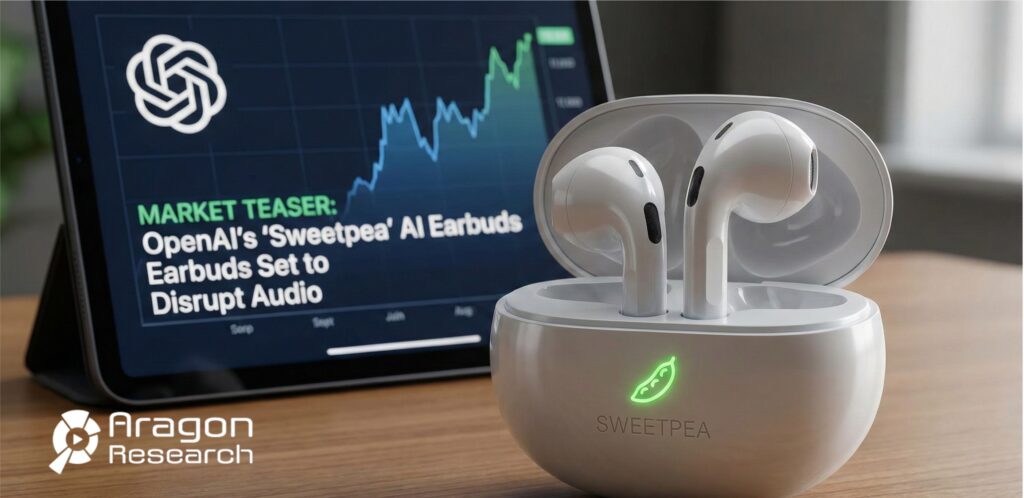
The shift toward personal artificial intelligence and AI enabled wearables is moving into the audio space as software leaders seek direct consumer access. Reports indicate that OpenAI is preparing to launch its first dedicated hardware device, codenamed Sweetpea, in the second half of 2026. This blog overviews the OpenAI Sweetpea news and offers our analysis.
Why did OpenAI tease the Sweetpea earbuds
OpenAI is reportedly developing high-performance earbuds designed by former Apple design chief Jony Ive to serve as a primary interface for ChatGPT. The device is expected to feature a custom 2-nanometer processor to handle complex AI tasks locally rather than relying entirely on cloud processing. By entering the hardware market, OpenAI aims to establish a distribution channel independent of mobile operating systems. This move places them in direct competition with the rumored Apple AI Pin and Google’s upcoming AI glasses launch scheduled for later this year.
Analysis
This hardware initiative represents a strategic attempt by OpenAI to break the platform duopoly held by Apple and Google. Currently, OpenAI must rely on third-party applications and browsers for distribution, which limits its ability to control the end-to-end user experience. By launching the Sweetpea earbuds, the firm seeks to own the interface where users interact with generative agents throughout the day. The focus on local processing via a 2-nanometer chip addresses the latency and privacy concerns that have hindered previous AI wearables.
The success of this device will depend on its ability to integrate into daily workflows more seamlessly than the smartphone. Unlike previous failures in the wearable market, OpenAI starts with an massive installed base of active ChatGPT users who are already familiar with the software. However, the hardware market is notoriously difficult for software-first companies, and OpenAI will face intense pressure from Google’s 2026 glasses rollout and Apple’s ecosystem lock-in. The competition suggests that the future of AI will be fought through ambient devices that prioritize voice and vision over traditional screens.
Enterprise Recommendations – Will Wearables Matter
It is too early for enterprises to evaluate the potential for audio-based AI assistants . Business leaders must begin assessing the security implications of devices that can process sensitive corporate data locally on a 2-nanometer chipset. As OpenAI moves toward H2 2026 production, organizations should review their wearable device policies to include audio-first interfaces. It is important to consider how these devices will integrate with existing enterprise communication tools like Teams or Slack.
We would note that there are use cases for wearables tied to Service – but demand has been low and even Microsoft (halo lens) has backed off their approach due in part to the costs of the devices and the lack of demand.
Google, Meta and Apple prepping Wearable Launches
Google is racing to launch its new Android XR Glasses but they are not here yet. Meta already has its Ray-ban based Meta Glasses and Apple is teasing its new Apple pin. Suffice to say, these will be consumer focused before they ever make it to the enterprise.
Bottom Line
OpenAI is making a significant gamble that consumers are ready for a dedicated AI device that bypasses traditional app stores. The launch of Sweetpea marks the beginning of a major hardware rivalry involving Apple, Google and Meta. Enterprises should monitor these developments closely to determine which form factor will become the standard for mobile AI interaction. Proactive governance of these ambient tools will be necessary as they begin to enter the workplace.
Have a Comment on this?