

Meta Releases Muse Spark Open
By Adam Pease
Why Did Meta Announce Muse Spark Open?
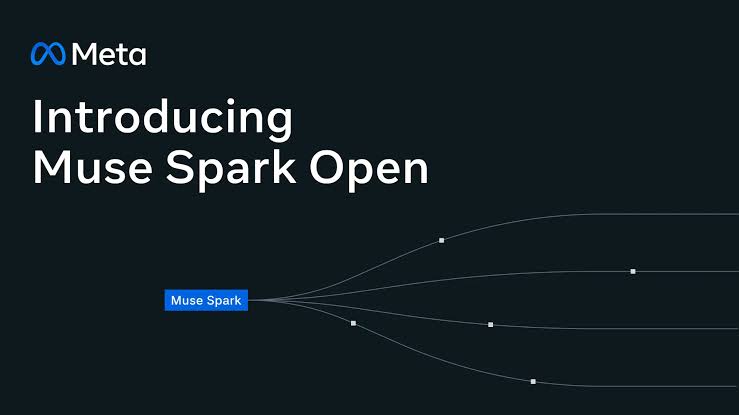
Meta released the weights for Muse Spark Open, positioning it as an advanced open-weight model with 816 billion total parameters and 42 billion active parameters. The architecture features a 1-million-token context window designed specifically for complex software engineering, multi-step reasoning, and agentic task execution. Crucially, the release targets desktop deployment through optimization on Apple MLX software using two Apple M5 Ultra Mac Studios. Meta also collaborated with hosted inference platforms such as Together AI, Fireworks AI, and Groq, alongside model hubs like Hugging Face and Microsoft Foundry, to ensure immediate availability across cloud and local platforms.
Why Did Meta Announce Muse Spark Open?
Meta released the weights for Muse Spark Open, positioning it as an advanced open-weight model with 816 billion total parameters and 42 billion active parameters. The architecture features a 1-million-token context window designed specifically for complex software engineering, multi-step reasoning, and agentic task execution. Crucially, the release targets desktop deployment through optimization on Apple MLX software using two Apple M5 Ultra Mac Studios. Meta also collaborated with hosted inference platforms such as Together AI, Fireworks AI, and Groq, alongside model hubs like Hugging Face and Microsoft Foundry, to ensure immediate availability across cloud and local platforms.
Analysis
This release represents a strategic move to democratize high-parameter agentic capabilities while expanding hardware partner ecosystems. By engineering an 816-billion-parameter mixture-of-experts model to run locally on unified memory desktop configurations, Meta bypasses traditional data center bandwidth bottlenecks for targeted enterprise developer tasks. This architecture forces competing model developers to re-evaluate how they optimize active parameter efficiency versus total parameter size for local hardware constraints. Furthermore, this advancement accelerates the viability of local developer environments, meaning software organizations can now execute multi-step coding agents and video parsing workflows on-premises without incurring recurring cloud inference costs or exposing sensitive intellectual property to third-party endpoints.
What Should Enterprises Do?
Enterprises must evaluate the total cost of ownership differences between hosted API infrastructure and local hardware deployment for developer teams. Software engineering leaders should test open-weight models like Muse Spark Open against proprietary cloud APIs for complex software maintenance and repository-level tasks. IT procurement teams need to review hardware refreshes, as high-bandwidth unified memory workstations now provide a alternative to dedicated server GPU clusters for localized edge development.
Bottom Line
The release of Muse Spark Open marks a pivotal transition where high-capability agentic AI moves from centralized cloud servers directly onto local developer workstations. Organizations should immediately audit their developer infrastructure strategies and run comparative pilot programs to assess the security and cost benefits of local open-weight model execution.
Have a Comment on this?