


RingCentral adds Agentic features to AIR Pro
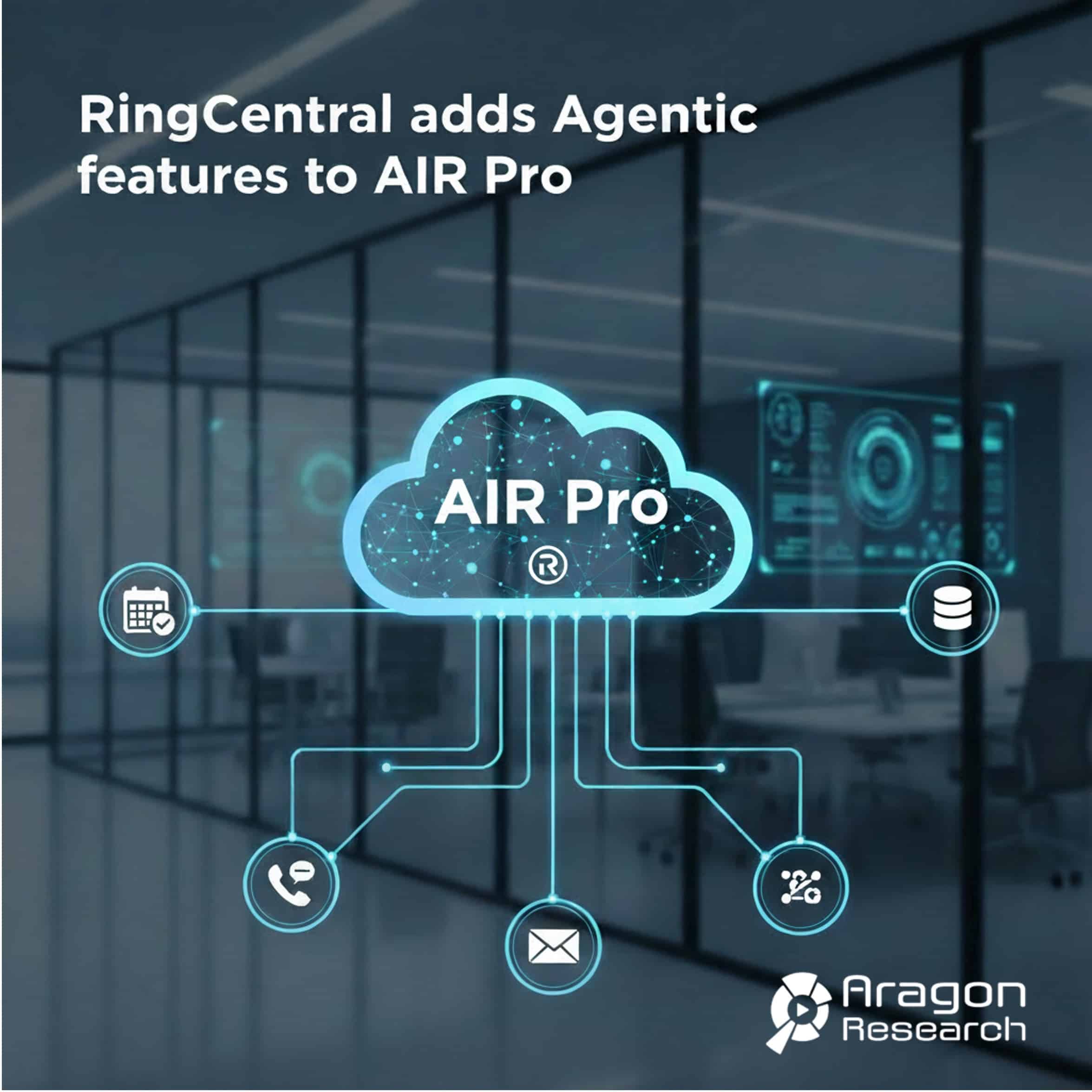
Image Design by Aragon, rendered by Gemini.
By Jim Lundy
RingCentral adds Agentic features to AIR Pro
Contact centers face an inflection point as intelligent automation shifts from merely assisting human operators to executing complex workflows autonomously. The demand for seamless consumer journeys requires technology vendors to embed advanced cognitive capabilities directly into their core communication infrastructures. This systemic shift forces organizations to reevaluate how they manage automated outreach and handle interactive customer resolutions at scale.
Dynamic market demands dictate that modern customer engagement suites must systematically reduce the operational friction found in traditional escalation processes. The pressure to deliver immediate resolutions is reshaping software requirements across the entire service industry. This blog overviews the RingCentral AIR Pro news and offers our analysis.
Why Did RingCentral Announce AIR Pro Updates
The enterprise communication vendor unveiled native artificial intelligence agents embedded directly into its core customer experience platform workflows. This deployment significantly expands the existing engagement portfolio by introducing autonomous outreach and intelligent conversational handoffs. The system can now proactively initiate outbound communication triggered by real time backend events such as missed billing payments or urgent service updates.
The underlying architecture seamlessly carries complete interaction history and connected application data into live agent transfers. This context preservation aims to eliminate the repetitive customer discovery phase that plagues traditional service handoffs. An included natural language builder allows administrators to configure these automated sequence commands without requiring dedicated programming resources or external technical support. A new conversational analytics interface also permits operational leaders to query performance metrics instantly using simple text prompts.
Analysis
RingCentral AIR’s product evolution represents a calculated pivot from reactive customer assistance to proactive revenue generation and retention management. By integrating these autonomous agents natively rather than relying on disjointed bolt on applications, they create a highly cohesive operational ecosystem. This architectural approach directly challenges standalone automation providers who lack deep voice network integration. The ability to execute multi step transactional workflows within a single customer interaction fundamentally changes the cost structure of routine service operations.
Competitors lacking unified data persistence across digital and voice channels will struggle to match this seamless escalation capability. This release firmly signals that legacy interactive voice response systems have become functionally obsolete in the modern enterprise stack. The broader market must now accelerate their own cognitive automation roadmaps or face rapid customer defection to unified platform providers.
Organizations running legacy contact center deployments must evaluate these new capabilities against their current operational bottlenecks. Technology leaders should audit their existing customer journeys to identify high volume transactional interactions suitable for autonomous execution. It is crucial to assess how this native integration compares with your current fragmented toolset of conversational software and workforce management applications. Evaluate this offering specifically for its capacity to maintain data context during complex live agent escalations.
Enterprises should map out specific operational use cases like payment collections or appointment scheduling to determine the potential financial return on investment. Enterprise buyers must also review their underlying data infrastructure to ensure customer relationship management systems can adequately feed these automated processes. Consider running a targeted pilot program focused entirely on proactive outbound engagement to measure actual containment rates before committing to a full platform displacement.
Bottom Line
The expansion of autonomous workflows marks a critical maturation in how enterprise communications platforms deliver measurable customer value. Organizations can no longer rely on disconnected automation tools that frustrate consumers during complex service resolutions. Implementing these cognitive capabilities requires deliberate planning around data accessibility and precise escalation triggers to maximize operational efficiency. Enterprises must strategically adopt these unified solutions to maintain competitive service levels, optimize customer satisfaction scores, and control escalating contact center labor costs.

-
display trackbacks
display trackbacks
display trackbacks
Comments { 3 }