


Zoom dives deeper into AI Agents & On-Prem Tech
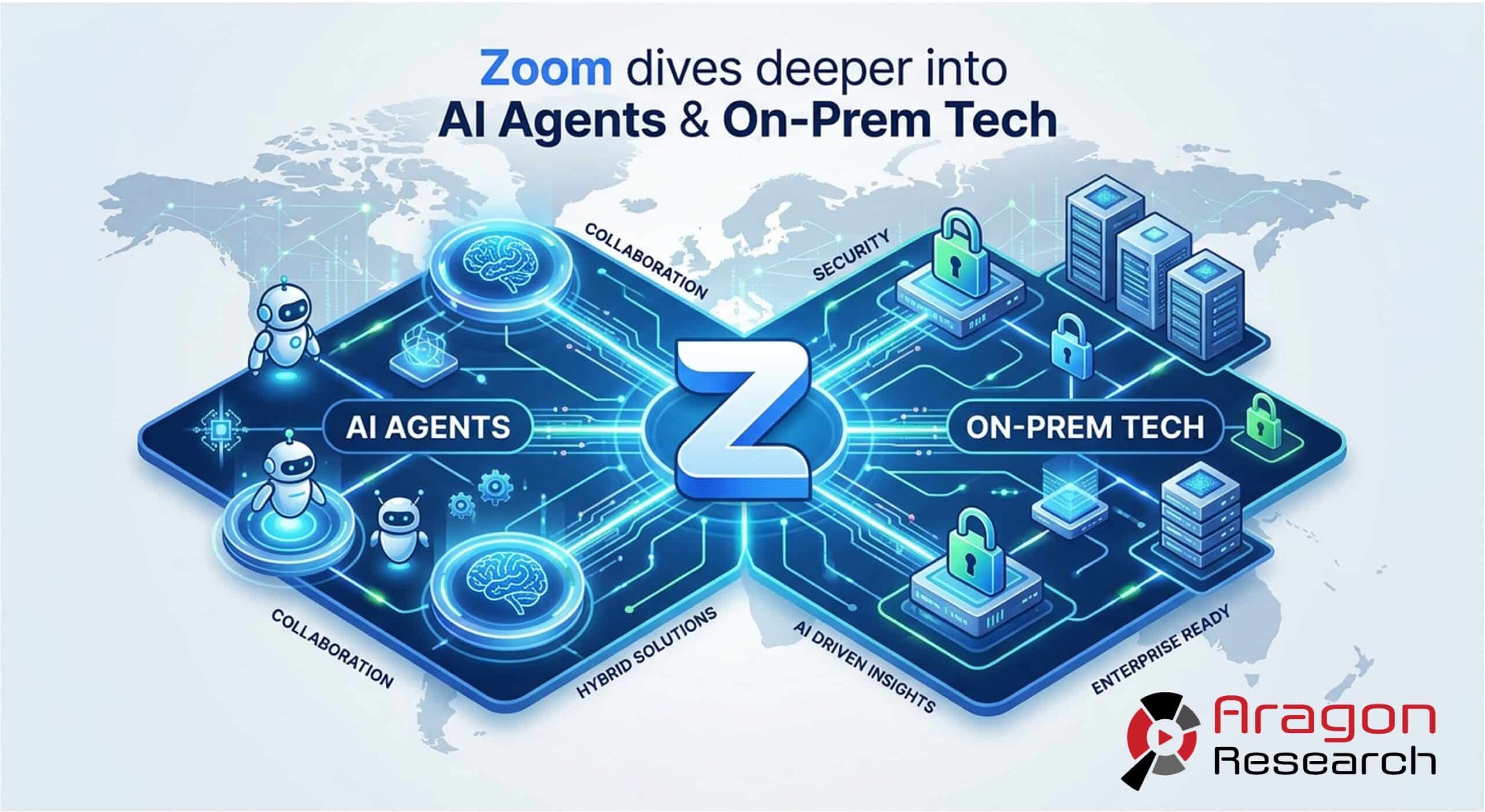
Image design by Aragon, rendered by Gemini.
By Jim Lundy
Zoom dives deeper into AI Agents & On-Prem Tech
Workplace productivity platforms are rapidly shifting away from passive communication toward active task resolution. Collaboration tools must now prove they can execute complex operational workflows rather than just hosting conversations. This blog overviews the ZoomMate AI agents and Zoom AI On-Prem announcements and offers our analysis.
Why did Zoom announce AI agents and On-Premises capabilities
The vendor introduced autonomous AI agents within its ZoomMate framework to automate multi-system task execution directly inside its workplace application. These agents ingest context from meetings, chats, and third-party enterprise platforms to generate deliverables and route workflow requests. This release aims to eliminate the friction of switching between disconnected business applications to complete basic administrative tasks.
Simultaneously, Zoom launched an on-premises deployment model for its AI Service built on its hybrid node architecture. This infrastructure addition allows highly regulated enterprises to process AI workloads like transcription locally. The twin announcements address two major enterprise demands: the need for automated task resolution and strict data residency controls.
The introduction of the agent framework allows users to deploy specialized digital assistants using simple text prompts. These agents integrate with external data repositories like Salesforce, ServiceNow, and Google Drive while maintaining corporate access permissions. This strategy transforms the chat interface into a primary operational dashboard for daily workflows. Note it also announced Agent Architect and Agent Performance Suite – see our other Blog on this news.
Analysis
This dual-pronged announcement highlights a critical transformation for Zoom as it actively tries to shed its reputation as just a video conferencing vendor. By establishing a comprehensive system of action via ZoomMate, Zoom is moving aggressively into the broader enterprise software market. This strategy attempts to lock enterprises into its ecosystem by making Zoom the central orchestration layer where discussions turn directly into transactional business data.
However, this aggressive expansion into autonomous agents means Zoom must now be trusted with deep access to sensitive corporate data models. Providing its AI tools with read and write capabilities across third-party platforms requires flawless governance and precise permission mapping. The market will see a clear divide between collaboration vendors that offer deep, secure integrations and those that rely on superficial connectors.
The introduction of the on-premises option is a highly calculated, defensive move designed to shield Zoom’s core enterprise accounts from cloud-only AI competitors. Financial services, healthcare, and government agencies have historically resisted generative AI tools due to strict data sovereignty and compliance rules. By processing sensitive workloads locally through Zoom Node, the vendor removes a massive adoption barrier for these conservative, high-value buyers.
This infrastructure pivot forces competing collaboration giants to rethink their cloud-only processing frameworks. Zoom is proving that a hybrid execution model is necessary to protect corporate intellectual property in highly regulated markets. Competitors lacking a robust local node architecture will find themselves increasingly locked out of lucrative public sector and legacy enterprise contracts.
Ultimately, Zoom’s long-term success with this release depends entirely on execution speed and cross-platform accuracy. If ZoomMate agents introduce security vulnerabilities or execute incorrect actions in backend databases, enterprise IT buyers will revert to isolated communication tools. True market transformation requires absolute reliability from the Zoom platform, not just conversational convenience.
What should enterprises do
Information technology leaders must thoroughly review their existing data governance policies before deploying autonomous agents across corporate systems. Organizations need to audit the permissions of external applications connected to their collaboration platforms to prevent unauthorized data exposure. It is vital to establish strict testing parameters for agentic workflows before rolling them out to general business users.
Furthermore, compliance officers in regulated industries should evaluate the technical architecture of the local node deployment model. Determine whether processing language models locally aligns with your specific regional data residency mandates and long-term security requirements. Ensure your technical staff can manage the operational complexity of a hybrid AI framework without straining existing infrastructure resources.
Bottom Line
The evolution of collaboration platforms into autonomous systems of action is fundamentally changing how modern enterprise workflows are designed. Organizations must move beyond basic communication tools and prioritize platforms that integrate secure task execution with flexible deployment options. True competitive advantage will belong to enterprises that successfully automate administrative burdens while maintaining rigid compliance standards.
-
display trackbacks
Comments { 1 }