

MidJourney, Warner Bros. and AI Indemnity
By Jim Lundy
MidJourney, Warner Bros. and AI Indemnity
The legal battle over generative AI and intellectual property is rapidly escalating, and enterprises need to pay close attention. In a move that signals a hardening stance from major media companies, Warner Bros. has now filed a copyright infringement lawsuit against the AI image generator Midjourney. This action comes just a few months after Disney and Universal launched their own similar legal challenges in June. This trend is a flashing red light for any business using these powerful new tools. This blog will analyze the implications of this latest lawsuit and reinforce why Aragon Research advises that enterprises must demand indemnification from their generative AI providers.
Another Lawsuit Piles on Midjourney
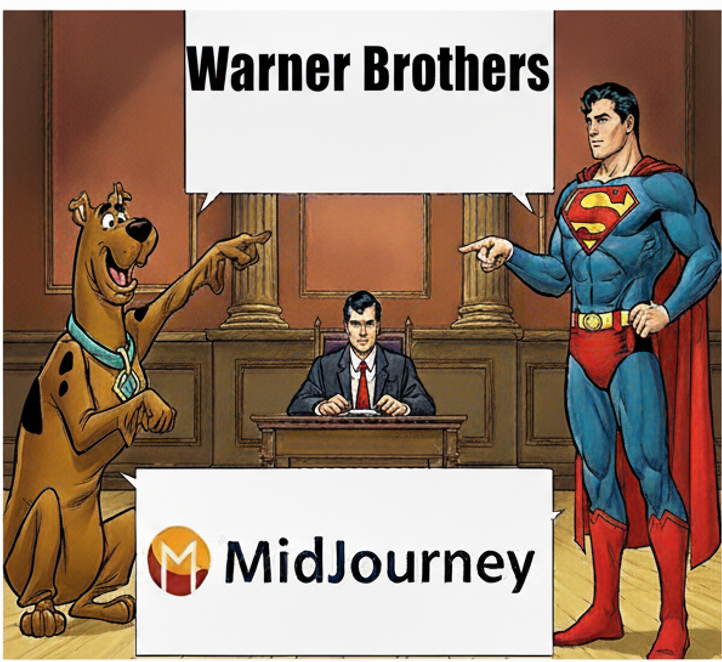
Warner Bros.’ complaint alleges that Midjourney knowingly facilitates the creation of infringing content based on its iconic characters like Superman, Batman, and Bugs Bunny. The suit points out that Midjourney allows users to generate this content without permission, arguing it is a “calculated and profit-driven decision.” This new lawsuit creates a powerful coalition of intellectual property holders, joining Disney and Universal, who previously sued Midjourney over the generation of their characters, from Darth Vader to Shrek. While Midjourney has argued that its use of copyrighted works for training falls under the “fair use” doctrine, the mounting legal pressure from some of the world’s largest media conglomerates creates significant uncertainty.
Analysis
These lawsuits represent a critical turning point in the adoption of generative AI. The core issue is no longer a theoretical debate about training data; it is now a practical question of legal liability. The most significant risk highlighted by the Warner Bros. suit is not just to Midjourney, but to its users. Without a contractual shield, any company that uses the service to generate an image that even vaguely resembles protected IP could be seen as a party to the infringement. This means the legal risk is effectively transferred from the tool provider to the enterprise user.
From Aragon Research’s perspective, this situation creates a clear dividing line in the generative AI market. On one side are enterprise-focused providers like Microsoft, Google, and Adobe, who have recognized this risk and now offer indemnification protection to their commercial customers. This means they will assume the legal and financial liability if a customer is sued for copyright infringement based on the output of their tools. On the other side are tools like Midjourney, which, by not offering this protection, leave their entire user base exposed. The lawsuits from these media giants are accelerating the market’s separation into enterprise-safe platforms and high-risk tools.
What Should Enterprises Do?
The message for business leaders is simple and urgent: you must mitigate your legal exposure immediately. If your organization or any of its employees are using non-indemnified AI tools like Midjourney for any work-related purpose, a policy should be implemented to halt this activity now. The risk of being entangled in legal action brought by entities like Disney or Warner Bros. has moved from a hypothetical possibility to a tangible threat.
Strategically, enterprises must establish a formal and non-negotiable policy for the procurement and use of all generative AI services. This policy must mandate that any approved vendor provide full indemnification against intellectual property claims. This clause should be treated with the same importance as data security and privacy requirements in any contract review. The potential cost of a copyright lawsuit far outweighs the perceived benefits of using an unprotected tool.
Bottom Line
The Warner Bros. lawsuit against Midjourney, hot on the heels of similar suits from Disney and Universal, is a definitive market signal. The era of casual, ungoverned use of generative AI in the enterprise is over. The legal risks are now clear, present, and significant. Aragon Research strongly advises that enterprises protect themselves by exclusively standardizing on generative AI platforms where the vendor contractually assumes liability for copyright infringement. In this new and contentious landscape, accepting anything less is an unnecessary and unacceptable business risk.
Our Third Transform Tour for 2025 featuring our Predictions for 2026.
Join Betsy Burton, Jim Lundy and Adam Pease to hear where markets are going over the next three years.
Have a Comment on this?