

The OpenAI Profit Push: A Rift with Microsoft?
By Jim Lundy
The OpenAI Profit Push: A Rift with Microsoft?
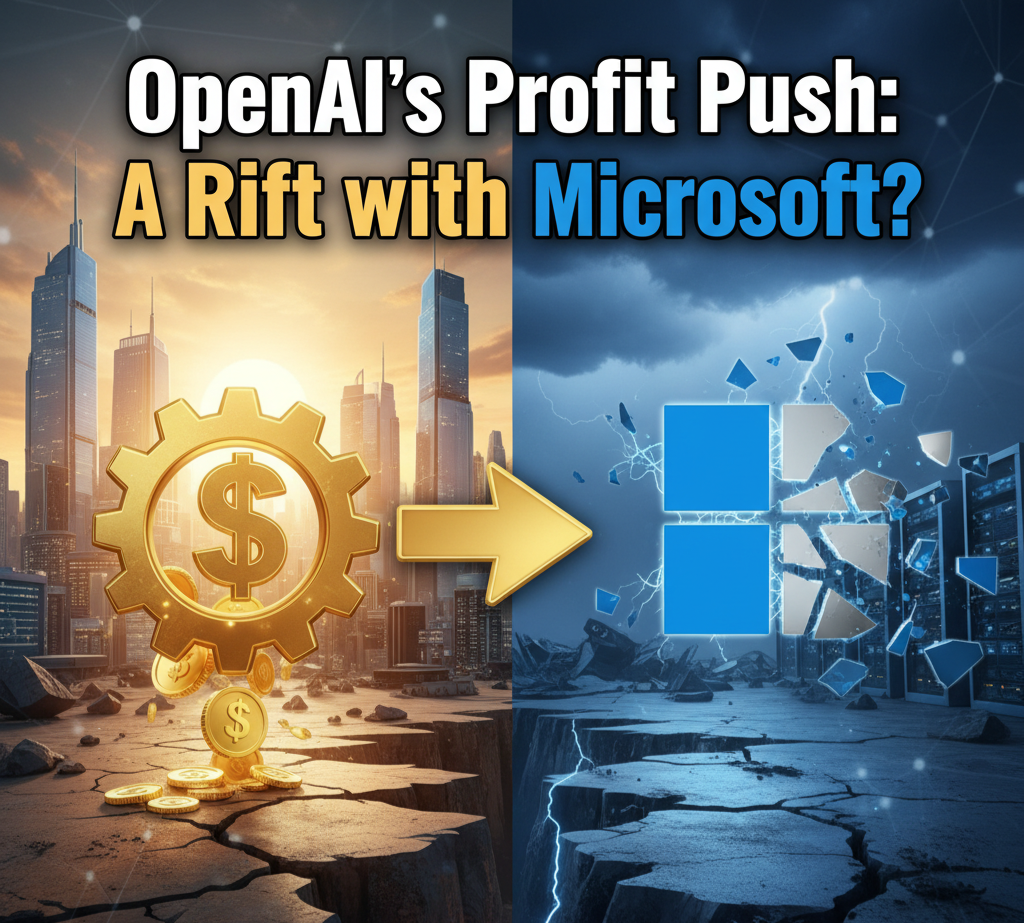
The tectonic plates of the AI industry are shifting once again. OpenAI, the powerhouse behind ChatGPT, has announced a landmark plan to transition into a for-profit entity, a move that could reshape its future and the entire technology landscape. While a non-binding agreement signals a new phase in its partnership with Microsoft, other moves suggest the relationship is under strain. This blog overviews OpenAI’s structural change and offers our analysis of what it means for the market.
Why the Shift to a For-Profit Entity?
OpenAI’s unique governance, controlled by a non-profit board, has been both a defining feature and a point of contention, highlighted by the brief ouster of CEO Sam Altman in 2023. This structure is proving insufficient for the company’s astronomical ambitions and capital needs. To fund moonshot projects like the “Stargate” data center and the development of Artificial General Intelligence (AGI), OpenAI requires access to capital markets on a scale that its current model cannot support. The transition to a for-profit Public Benefit Corporation (PBC), with the non-profit retaining a controlling stake valued at over $100 billion, is a strategic necessity to attract the massive, long-term investment required to fuel the next wave of AI innovation.
Analysis
The non-binding memorandum of understanding with Microsoft is more telling for what it isn’t than what it is. It’s a public placeholder, not a locked-in commitment. The real story lies in OpenAI’s actions, which indicate a clear strategy to diversify and reduce its deep dependency on Microsoft. The reported $30 billion, five-year cloud contract with Oracle starting in 2027 is a bombshell. This is not a trivial secondary supplier; it is a fundamental move to build a multi-cloud foundation, effectively loosening the “primary provider” status that Microsoft has enjoyed.
This pivot suggests OpenAI is positioning itself as a fully independent power, not merely the advanced research lab for Microsoft’s product suite. The capital required for its roadmap will likely run into the trillions of dollars over the next decade. Microsoft may not be able or willing to provide that level of funding alone. We anticipate OpenAI will aggressively court new capital from sovereign wealth funds and massive global investors like SoftBank, with whom it is already partnering. Microsoft’s role could evolve from that of a kingmaker to one of several powerful stakeholders. This transforms OpenAI from a strategic asset into a direct competitor for enterprise AI workloads.
What Should Enterprises Do?
This news should serve as a clear signal for enterprise leaders to re-evaluate their AI strategy. Organizations that have gone “all-in” on the Microsoft and OpenAI stack must now consider the long-term implications of a more independent OpenAI. While the technology will remain top-tier, the nature of the commercial relationship and deep integrations could change. This is not a moment for panic, but for prudent planning. Enterprises should begin to more deeply understand the offerings from other major cloud providers and AI model builders. The era of a single, dominant AI partner is likely ending, making a multi-model and multi-cloud strategy more critical than ever.
Bottom Line
OpenAI’s move to become a for-profit entity is less about its partnership with Microsoft and more about its own ambition to become an enduring, independent technology giant. The simultaneous negotiations with Microsoft and the massive deal with Oracle reveal a calculated strategy to secure its own destiny. For enterprises, this is a critical juncture. The AI market is not consolidating around one vendor; it is expanding. The smartest strategy is to build flexibility into your AI roadmap, avoiding vendor lock-in and preparing for a future with multiple, powerful AI platforms competing for your business.
Our Third Transform Tour for 2025 featuring our Predictions for 2026.
Join Betsy Burton, Jim Lundy and Adam Pease to hear where markets are going over the next three years.
basketball legends github
September 15, 2025
This analysis feels insightful, especially the emphasis on OpenAIs potential shift from dependent partner to independent competitor. The multi-cloud strategy and funding diversification points are particularly concerning for enterprises relying heavily on the Microsoft-OpenAI ecosystem.